
Client: King County Wastewater Treatment Division
Services: Strategy · Creative · Multicultural Media · Community Engagement
Sector: Energy / Utilities
Executive Summary
King County's wastewater projects are technical, long, and right in people's neighborhoods. Over several years and five sites, Vida turned engineering detail into clear, local information people could use. Residents learned what clean water infrastructure does for them and what to expect while it is built or improved. Nearly 1 million Coal Creek ad impressions in Spanish, Chinese, Vietnamese, Russian, and English. The Elliott Wet Weather Treatment Station does essential work that most people never see. To help residents understand it, Vida partnered with King County’s video production team on a virtual tour that shows how the station works and why the upgrade matters. The tour went on to become the County’s most-viewed video on Instagram to date.
Introduction
The King County Wastewater Treatment Division protects public health and Puget Sound every day. Most residents never think about it until a project arrives on their street. Construction, shoreline restoration, and plant upgrades raise real questions about noise, traffic, access, and cost.
Technical reports and engineering updates do not answer those questions for most people. Vida has led and supported community engagement, public education, and strategic communications for the division across multiple projects. The goal was always the same: make complex work understandable and relevant to the people who live beside it.
The process: How we built belonging
L - Local Insight
Critical service, invisible to the public
Clean water service is essential, yet largely unseen. Each project site had its own neighbors and concerns. Local insight shapes how we reach people. For King County, Vida tailored messaging to the communities around the Vashon, Carnation, and Brightwater treatment plants. On Vashon Island, where most homes use private septic, we paired septic care tips with County infrastructure updates, which reached residents who may not have seen themselves as part of the service area.
In Carnation, we highlighted how the plant’s recycled water sustains the Chinook Bend Natural Area, building local pride in English and Spanish. At Brightwater in Woodinville, we promoted the facility’s greenspace and learning center, recognized the operators behind the work, and shared wastewater career pathways in English, Spanish, Chinese, and Russian.
O - Observation
Listening at every site
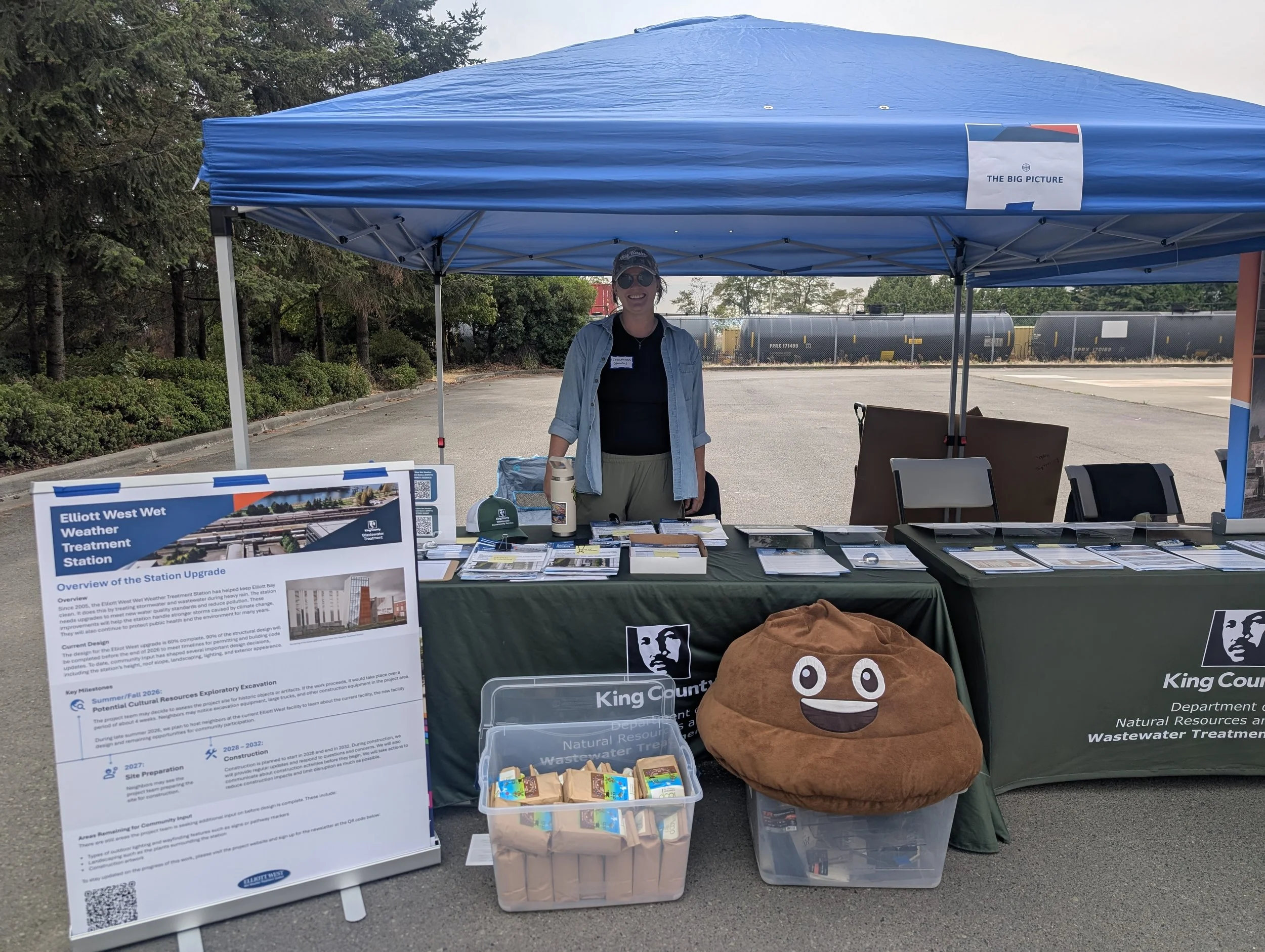
On the Elliott Wet Weather Treatment Station project, we learned what the community needed by listening to their questions about how they’d get updates, how they could shape the design, and how big the new building would be. We answered those questions directly and made a point of showing neighbors how their feedback was shaping the project, so they could see their input made a difference. One insight changed our approach the most: neighbors in the nearby condos are best reached where they live, through people they already trust. We started partnering with condo board members and residents to share information directly, and a lobby pop-up at Mercer Place, where residents could see the upgrade from their own building on a 3D model, showed how well it worked. Our next round of public input will build on this hyperlocal approach.
C - Co-Creation
Plain language, local context
Vida translated detailed technical information into clear, easy-to-understand materials. Campaigns explained the clean water services treatment systems provide. They shared project updates and celebrated improvements made by plant teams. Vida supported these projects:
Vashon Treatment Plant
Brightwater Treatment Plant
Carnation Treatment Plant
Coal Creek Sewer Pipeline
McSorley Creek Shoreline and Estuary Restoration
Elliott Wet Weather Treatment Station
Sammamish Plateau Diversion Project
Mouth of Duwamish Wet Weather Facilities
A - Amplification
Reaching each project's neighbors
Vida matched channels to each site. Geotargeted digital ads reached people near specific projects. Display ads, newsletters, blogs, mailers, and flyers carried updates into homes and inboxes.
To introduce the Sammamish Plateau Diversion Project to residents and commuters, Vida ran a two-week geotargeted digital campaign in seven languages: English, Spanish, Simplified and Traditional Chinese, Korean, Japanese, and Russian. The campaign delivered more than 1.1 million impressions, beating King County’s goal of 1 million. The results also showed the value of reaching people in their own language. In-language ads made up less than half of all impressions but drew more than two-thirds of all clicks, and on average they earned about three times as many clicks per view as the English ads.
L - Lasting Impact
A trusted neighbor, project after project
King County has returned to Vida across multiple projects and years.
King County keeps coming back to Vida. Since 2019, we’ve supported eight Wastewater Treatment Division projects across the region, from treatment plants on Vashon Island and in Carnation and Woodinville to major conveyance and wet weather projects in Newcastle, Sammamish, Seattle’s Interbay, and SODO. Some of these partnerships, like Coal Creek and Elliott West, have lasted more than six years and carried through planning, design, and construction. That continuity lets us build on what we’ve learned in each community, so neighbors see familiar faces and consistent, trustworthy information from one phase to the next.
Results: Real results, measurable impact
Eight treatment, pipeline, and restoration projects supported across King County
Multi-year partnership with the Wastewater Treatment Division
Mailed 7,000 project newsletters to households near the Sammamish Plateau Diversion project area
Connected with over 200 people in-person at Vashon Strawberry Festival and over 1,000 at Issaquah Salmon Days about WTD projects
Nearly 1 million Coal Creek ad impressions in Spanish, Chinese, Vietnamese, Russian, and English
Conclusion: Local impact, anywhere.
Infrastructure works best when the people beside it understand why it matters. Vida helps King County explain clean water in terms that make sense on the ground, one neighborhood at a time. That is how we work: clarity builds trust, and trust keeps projects moving.