
Client: Snohomish County Health Department
Services: Research · Community Engagement · Reporting
Sector: Health
Executive Summary
Snohomish County needed its own data on how Latine and Indigenous Latine residents define well-being and experienced the COVID-19 response. Vida built a mixed-methods assessment with Health Department staff who are part of the community. Focus groups and interviews in Spanish and English gave the County a data-driven foundation for equitable service planning.
Introduction
In 2024, the Snohomish County Health Department set out to understand two things. First, how Latine and Indigenous Latine residents see the department and define well-being. Second, how they experienced the County's pandemic response, before, during, and after.
Regional and national data could not answer those questions for this county. Standard English-language surveys would miss the people the department most needed to hear from. The County needed research designed with the community, in the community's language, that residents would trust enough to answer honestly.
The process: How we built belonging
L - Local Insight
No local data, no local plan
The department lacked Snohomish County-specific data on Latine and Indigenous Latine residents. Without it, service planning relied on assumptions. Residents' own definitions of well-being, the barriers they faced, and their view of the department's role were unknown.
O - Observation
Questions written by the community, for the community
Vida co-developed every question with a Project Advisory team. The team was made up of Health Department staff, some of the Latine and Hispanic community. Their lived experience shaped what we asked and how we asked it.
C - Co-Creation
Research people could see themselves in
Focus groups and one-on-one interviews were the heart of the work. A culturally tailored survey, offered in Spanish, extended participation and added quantitative data. Questions explored how families define well-being, the resources they need, the barriers they face, their COVID-19 experience, and their familiarity with the Health Department.
A - Amplification
Reaching participants where trust already lives
We put participant safety first. Rather than asking people to share sensitive details like age, gender, country of origin, or immigration status, we recruited intentionally from the communities we wanted to hear from by partnering with trusted community leaders and community connectors.
L - Lasting Impact
A foundation for equitable planning
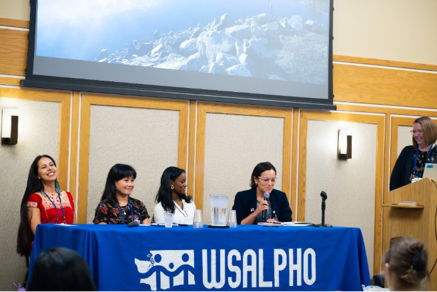
The findings showed how families define wellness and where County services fall short. They pointed clearly to the need for more bilingual communication and outreach. The County now has its own data to plan services with this community, not around it. The data has directly shaped the county’s strategic direction and provided a roadmap for working and supporting the other Latine and other underrepresented communities. Vida shared insights and strategies at the Learning Symposium for the Washington State Association of Local Health Officials.
“We contracted with The Vida Agency to conduct a community health assessment for Snohomish County, focusing on the Latine and Hispanic communities. This assessment provided local, quantitative, and qualitative disaggregated data on the experiences of well-being among the Latine and Hispanic community, as well as identified barriers to accessing services. This comprehensive report has helped inform the Health Department's strategic directions and provided a roadmap for working and supporting other underrepresented communities. It was a real pleasure to collaborate and partner with TVA on this project. TVA delivered an insightful, culturally responsive, and actionable community health assessment that is helping to inform our policies, processes, and practices.” Helen Wong, Health Equity Policy Analyst.
Results: Real results, measurable impact
Eight people participated in interviews, five in English and three and Spanish. We facilitated two focus groups, one in English with ten participants and one in Spanish with six participants.
Mixed-methods assessment combining focus groups and one-on-one interviews.
Every question co-developed with a Project Advisory team of community-connected staff.
Clear findings on how families define wellness, barriers to County services, and demand for bilingual outreach.
Conclusion: Local impact, anywhere.
The best questions came from people who live the answers. By building the research with community-connected staff, Vida helped Snohomish County hear residents it had rarely heard from. That is how we work: research that earns trust produces data worth acting on.