
Words can get worn down through overuse until they stop meaning anything. "Consultant" is one of them. It conjures a stranger who shows up with a deck, tells you what's wrong, and leaves before anyone has to live with the consequences.
That's not what happens at Vida. And the word we use instead, “co-creator,” isn't a cute rebrand. It describes how the work actually gets done. The difference isn't semantic. It isn't wordplay for its own sake. It signals what you're walking into if you work with us or for us, and what you're expected to bring to the table.
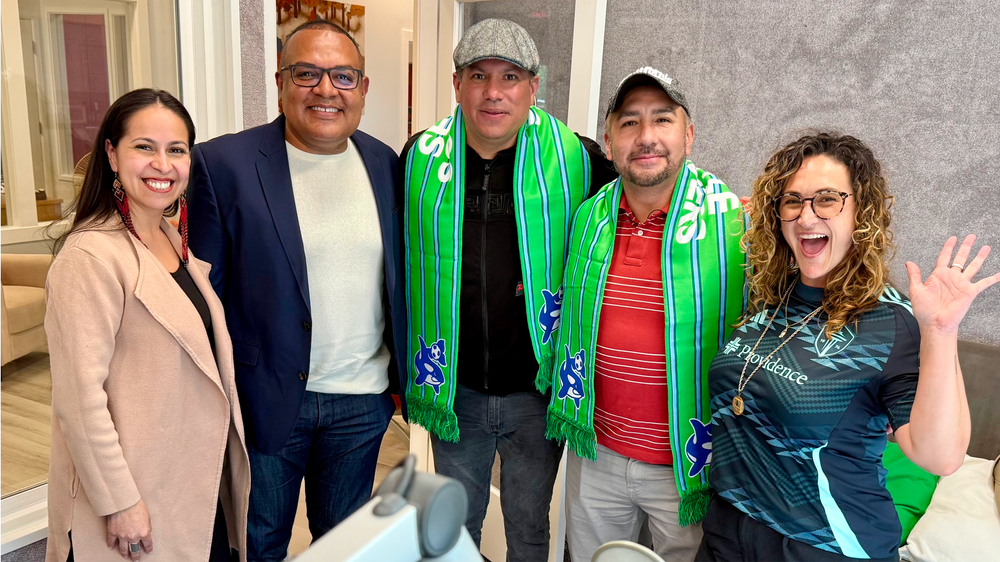
Consulting delivers recommendations after the thinking is done. Co-creating brings community members into the room before we set strategy, through a methodology called Community Labs. The result: work that gets claimed, not just approved.
What Does "Co-Create" Actually Mean?
Consulting implies a hierarchy, which also implies the person at the top must be lavishly compensated: the expert speaks, the client listens (and shells out big bucks for the advice). Co-creating implies a shared stake. Everyone in the room has skin in the game, and everyone shapes what happens next.
At Vida, we co-create with our clients and our communities to do better, and be better. It’s why our work works better, performs better, and delivers better results.
How Is Co-Creating Different from Consulting?
Traditional consulting follows a simple sequence: gather information, form a recommendation, and deliver it. The community shows up as a data point, as something to be surveyed, segmented, and summarized in a slide.
We run the opposite sequence. At Vida, we believe community insight must shape the work, not simply inform it. That's a real distinction, not a rhetorical one. Informing the work means the community gets consulted after the strategy is basically finished. Shaping the work means the community is in the room while the strategy is still wet.
Here's how you can tell the difference: if the right people aren't in the room, they won’t be in the results. Not "might not be." Won’t. A campaign built without the people it's meant to reach isn't a campaign with a gap. It's a campaign built on a guess.
Isn’t “Getting the Right People into a Room” Just a Fancy Way of Saying Focus Group?
Community Labs is our unique co-creation methodology: a structured, facilitated process that brings community members into the work before we set strategy. Not to validate decisions already made. To shape them.
It's worth being precise about what this isn't. It's not a focus group, where a company tests a finished idea against a room of strangers. It's not an advisory panel, where community members get a seat but not a pen. Community Labs isn't a program. It's the whole point — the place where the work actually begins.
That matters because it changes what "input" means. A focus group tells you whether people liked something you already built. Community Labs puts community members in the build itself, with engagement and investment that fit the project.
Community Labs is a methodology, not a contact list. The framework runs the same in Phoenix as it does in Seattle, or wherever your audience might be. What changes is who's in the room, and finding the right people is exactly the work we do best.
How This Changes How We Run a Project
Our L.O.C.A.L. process breaks the work into five stages, and each one resists the traditional consulting instinct to move fast and talk first (while still getting the work done efficiently, on time, and on budget).
Local Insight comes before anything else. That means thoroughly understanding the specific challenge, engaging with the community, and internalizing the cultural context. No strategy gets written on assumptions.
Observation follows. The best insights come from the people you're trying to reach, not the person who wrote the brief. Observation isn't passive here. It's the actual research method.
Co-Creation is where the community stops being an audience and starts being a builder. The work is better when the community helps build it. Full stop, no qualifier needed.
Amplification executes with precision, so the message reaches the people who need to hear it most, where they spend their time and attention.
Lasting Impact tracks measurable change, not just the baseline KPIs a client expects to see. Our impact reports don't check boxes or pay lip service to participation. They honor it.
None of these five steps work if the "co" in co-create is decorative. Each one depends on the community actually being present, not just presented.
Why Our Approach Matters
For our clients, this means the strategy you get isn't ours alone. You helped build it, so you'll defend it as though you built it yourself—because you did.
For our communities, this means you're not a delivery mechanism for someone else's message. Community is not simply the audience. Community is also the client. That shows up in how CBO partners get compensated, how we credit community members, and how we create every culturally fluent material in the languages of the people it's meant to reach.
And for anyone considering joining us here at VIDA: this is not a place where you execute someone else's finished strategy and call it a day. You're in the room while the thinking happens. You watch the plot thicken. You get to be part of the story before anyone knows how it ends.
Ready to Co-Create?
Most agencies show up to translate a message. We show up to translate an idea, and it takes more than one person and perspective to do that well.
Whether you're a prospective client, a community partner, or someone considering joining our team, our invitation remains the same: If you’re ready to co-create and have a meaningful, lasting impact, we’re here to help you shape your story.
Frequently Asked Questions
What does "co-create" mean at Vida?
Co-creating means community members and clients help shape strategy before we finalize it, rather than reviewing a finished plan built without them. It's the foundation of our Community Labs methodology.
How is Community Labs different from a focus group?
A focus group tests a decision that's already been made. Community Labs brings community members into the work before we set strategy, so their input shapes the direction rather than simply reacting to it.
Does co-creating take longer than traditional consulting?
It requires more upfront engagement — Local Insight and Observation come before any strategy gets written. That investment makes the resulting work durable and specific to the community it serves, not generic and quickly discarded.
Who is Community Labs designed for?
Community Labs works across sectors — public agencies, private organizations, and the communities Vida serves directly. It's available at different levels of engagement and investment, and the framework travels: the same process that works in Seattle works in Phoenix.
What does this mean for someone considering a career at Vida?
It means the work isn't handed to you finished. Team members are expected to sit with communities, listen more than they speak, and help build strategy from the ground up — not just execute a brief someone else wrote.