
UW Medicine, UW Telebuprenorphine Program
Client: Public Health – Seattle & King County (PHSKC)
Services: Research · Strategy · Creative · Community Engagement
Sector: Health
Executive Summary
The Telebupe Hotline offers fast access to buprenorphine for opioid use disorder, with no in-person visit required. The people who needed it most were the least likely to hear about it through clinics or ads. Vida used overdose and pharmacy data to pick priority corridors, then saturated them with bold, plainspoken creative across more than 25,000 pieces of collateral. The program's King County success helped pave the way for statewide expansion.
Introduction
PHSKC and UW Medicine launched the Telebupe Hotline as a new, low-barrier resource. Callers could get rapid access to buprenorphine treatment without an in-person appointment. The challenge was twofold: introduce a brand-new service, and increase use among people traditional channels were not reaching.
Many people who could benefit most were navigating active addiction, unstable housing, or limited access to care. Clinical referrals, social workers, and standard digital ads were not enough. They face overlapping barriers: distrust of institutions, inconsistent phone or internet access, and daily survival priorities. PHSKC needed a campaign that could cut through urban noise and be understood in seconds.
The process: How we built belonging
L - Local Insight
People who would never see a clinic ad
The audience was defined by behavior and context, not demographics. Unhoused residents and people in active addiction move through the city differently. They were not on the channels where health services usually advertise. The message had to find them where they already were and be understood instantly.
O - Observation
Following the data to the street
Vida and PHSKC analyzed heat maps of known overdose locations alongside pharmacy data showing where hotline-initiated prescriptions were filled. Together, they revealed priority neighborhoods and corridors with heavy foot traffic from people traditional outreach was missing. Every placement decision followed from that map.
C - Co-Creation
Unmistakable, not entertaining
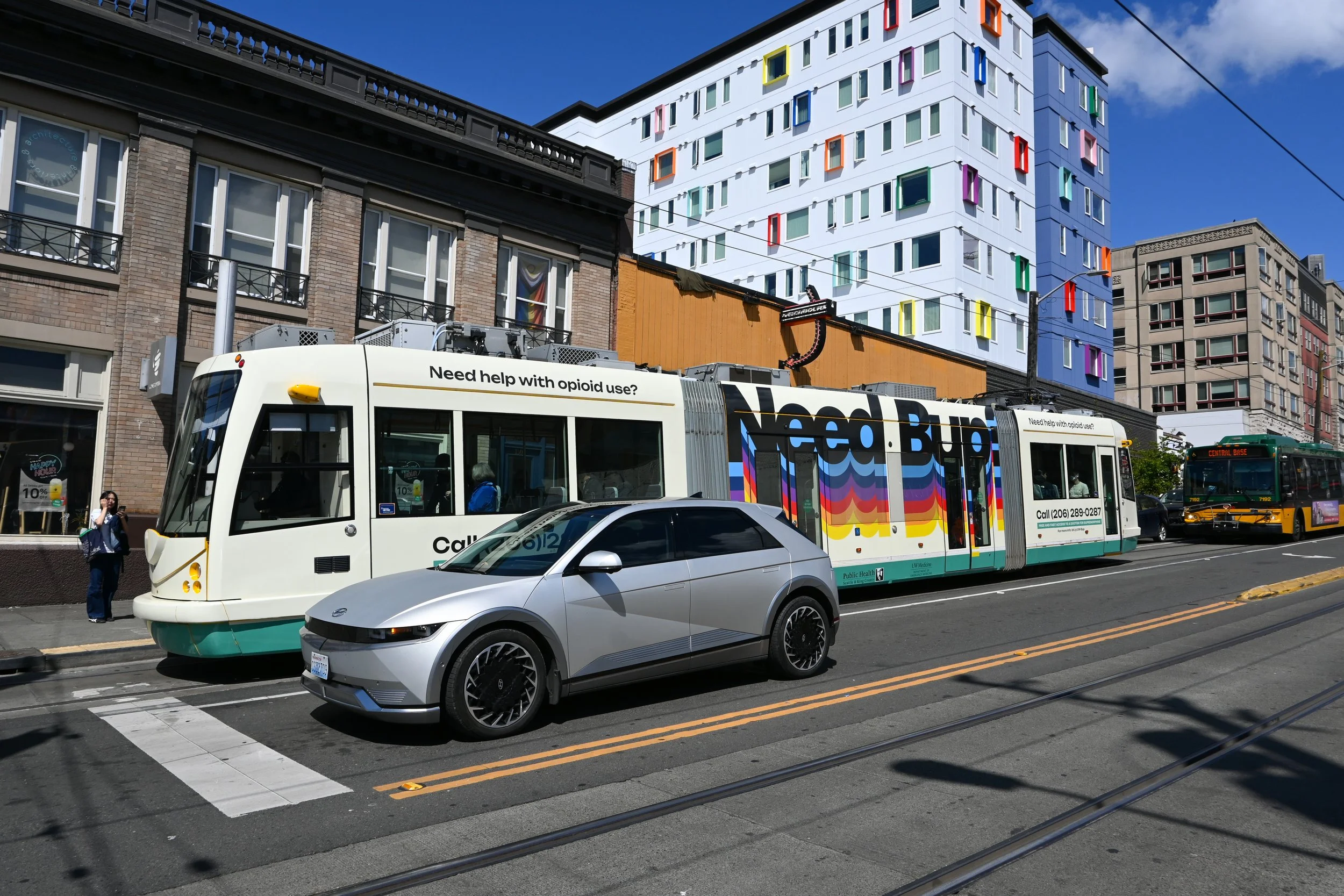
Vida explored multiple creative directions to balance boldness with clarity. The final system used a saturated, slightly vintage color palette and a bold, simple typeface. At its center was one direct, plainspoken line that doubled as the call to action: Need Bup? was designed to be read in seconds, from a distance, by someone on the move. Everything was produced in English and Spanish.
The suite was built for real life on the street:
Motion graphic video
11×17 posters, yard signs, and sidewalk chalk stencils
Stickers for naloxone boxes, die-cut stickers, and 4×6 postcards
Waterproof business cards that survive Seattle weather
Useful items that open conversations: keychain flashlights, lip balm, socks with hang tags, breakaway lanyards, and pens
A- Amplification
A persistent presence where it mattered
The campaign launched with a coordinated citywide rollout. Posters were wheat-pasted across priority areas. Yard signs went on curbs and medians. Chalk stencils marked key intersections. Vida replaced posters and stencils during the campaign so they stayed legible, keeping assets live for more than six months.
The First Hill Streetcar was fully wrapped in the campaign design. Its route links Capitol Hill, First Hill, Chinatown-International District, and Pioneer Square, passing clinics, shelters, hospitals, and service providers. It carries more than 4,000 riders a day.
A guerrilla light-projection activation beamed the message onto buildings in priority locations. Outreach teams handed out postcards and naloxone during the projections. Vida's team spent four days embedded in the community, and connected dozens of pharmacies, CBOs, and service providers that were not yet linked to PHSKC's materials clearinghouse.
L - Lasting Impact
From King County to statewide
The campaign introduced the Telebupe Hotline to communities that had been hard to reach, increasing awareness and use through a persistent, visible presence. Because of the program's success in King County, oversight is transitioning to the Washington State Department of Health to scale the hotline statewide.
Results: Real results, measurable impact
25,000+ pieces of collateral designed, produced, and distributed
6+ months of continuous street presence
4 days of embedded community outreach, including a light-projection activation with naloxone distribution
Dozens of new pharmacy, CBO, and service-provider connections
Program expanding statewide under the Washington State Department of Health
Conclusion: Local impact, anywhere.
The right message in the wrong place reaches no one. Vida let overdose and pharmacy data decide where to show up, then built creative that could be understood in a glance. That is how we work: meet people where they are, and make it unmistakable. Now that reach is going statewide.